
Ep 30: Why Men Pull Away When They Need Help Most
November 17, 2026
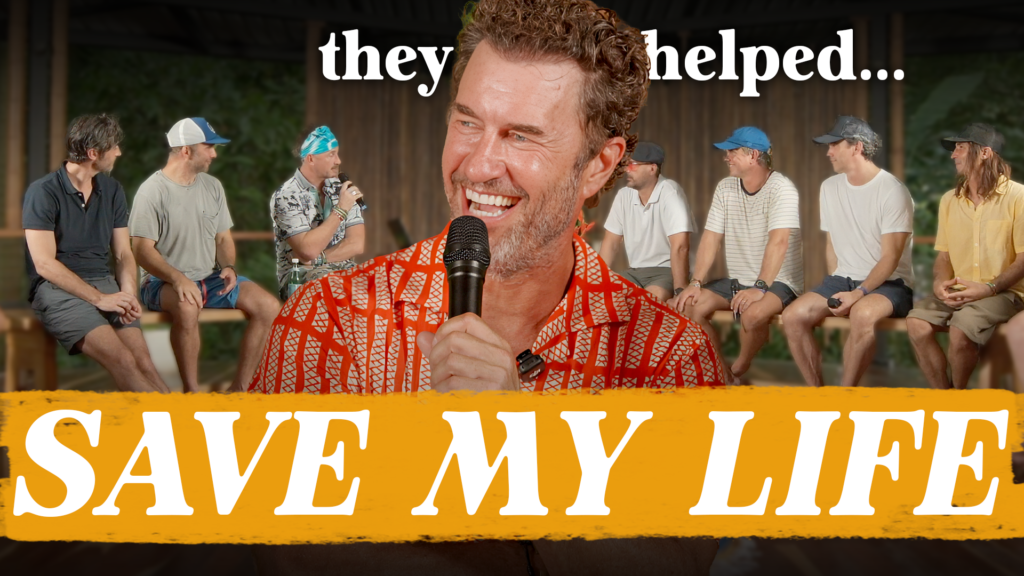
For his 50th birthday, Blake takes No Magic Pill to the jungle of Costa Rica and sits down with the men’s group that has been showing up for him, and for each other, for 19 years. It started when Blake asked his father about his regrets and heard that he had let his friendships fade while he focused on work and family. Blake decided not to make the same mistake, sent an email to a group of friends, and planned a fishing trip to Colorado. Seven or eight guys went. Today there are 14 of them, and they call themselves the Rugged Adventure Club.
Blake uses the occasion to make one request of everyone listening: consider starting or joining a men’s or women’s group. The group talks about why men pull away exactly when they need support, why staying quiet so you won’t be a burden robs your friends of the chance to help, and the ground rules that have kept them together. They also share what they did, and what they would tell anyone else to do, during the period when Blake did not want to live, and how they have handled conflict, grief, career setbacks, and recovery.
“You’re robbing us of the opportunity of being a good friend when you isolate because you’re afraid you’re being a burden.”
~Blake Mycoskie
What You’ll Learn
- How one conversation with his father led Blake to start a men’s group 19 years ago
- Why men isolate when they are struggling, and why reaching out is never a burden
- The ground rules that keep a group together: confidentiality, consistency, and not treating it like therapy
- What it means to put the friend over the friendship
- What friends can do when someone they love is in a mental health crisis, and when to bring in professionals
- How to start your own group, even if it is just a couple of friends and a weekend away
The Conversation
A Lesson From Blake’s Father
A couple of decades ago, Blake sat down with his father to learn what he knew and asked whether he had any big regrets. The one that stuck: as his father focused on work and family, he stopped making time for his friends, and by the time he noticed, those friendships were hard to bring back. Blake, then in his late 20s and before TOMS took off, sent an email to a group of guys suggesting a trip to Colorado. It was basically a fishing trip. Nineteen years later, the group that started with seven or eight men has grown to 14, and some of its members joined only in the last five to seven years. One member has already passed the lesson on to his daughter, and another tells his three daughters that some of his best friends came from college and beyond. Blake’s message to anyone who is 50 and has never done this: you can start today, and it can be as simple as finding a time to go camping.
Don’t Ask, Act
One member, a Navy SEAL, brings a refrain from the SEAL teams: a great teammate or a great friend doesn’t ask what you need, they act. Being close enough to know what a friend is going through means you can just start doing things instead of putting the burden on them to ask. Blake applies the same idea to getting a group started. You don’t need permission, and you don’t even need to call it a men’s group. Invite a couple of guys away for a weekend, ideally somewhere in nature, because it takes a couple of days to put the phones down and let your guard down. Another member points out what changes after childhood: school, clubs, and neighborhoods give kids a place to meet every day, and adults have to build that structure for themselves.
The Fear of Being a Burden
Asked when they isolated just as they needed the group most, the men get specific. One describes carrying stress and going quiet because he didn’t want to be a burden, and waking at three in the morning repeating the mantra he learned from Blake: I’m enough, I’ve always been enough. Another, a pro snowboarder for 15 years, kept the loss of his main source of income to himself from May until March, then finally told two friends on a walk during a surf trip. Within 12 hours, the group was spinning up new business ideas, and he wonders what would have happened if he had spoken up sooner. A third skipped the trips for about three years when his kids were small and calls them some of the hardest years of his life. Blake’s answer to all of it is the line at the heart of the episode: when you isolate because you’re afraid of being a burden, you rob your friends of the chance to be good friends, because the greatest joy in the world is helping out your friends.
Friendship Over Fear
Preparing for the conversation, Blake named the group’s non-negotiables. The first is confidentiality: nothing said in the group is talked about outside it. The second is consistency, which for a group spread around the world means Zoom calls, an annual trip, and above all a daily text thread where they celebrate each other’s wins and ask for help. When Blake was struggling, he used that thread to ask if someone could visit him at the treatment center, and two of the guys showed up the first weekend. The third is that this is not therapy. It is brotherhood, and no one feels responsible for fixing anyone else. One member adds the motto the group adopted about 10 years ago, friendship over fear: be fearless in bringing yourself to the group, and always be willing to put the friend over the friendship, even when that means a hard conversation. They also share what helps a new group go deep fast, like going around the table after dinner and asking what is one thing you wanted to accomplish this year that you didn’t, and how can we support you.
Just Show Up
Blake asks the group what they did during the period when he was suicidal, so listeners can do the same for a friend. The answer is to show up in numbers, without pretending to have the answers, and let the person know they are not alone. One friend noticed something was wrong when Blake, always excited about ideas and business, stopped wanting to talk about either. Another stresses knowing when friends are not enough and getting professionals involved quickly, without stepping away. A friend Blake confided in on a flight home offered a reframe that helped: your life’s not over, you’re just injured, and like a broken leg, you’ll be on crutches for a while, then walk, then run. Looking back, Blake says the one thing he wishes he had done is spend more time alone being honest about the decisions that had pulled him away from his values. For anyone who is struggling, his advice is to tell at least one person how you are really doing, because getting it off your chest makes it less likely to take over. The group also helped him see through his belief that he could not be a good dad, and the men talk through how they handled their one real fight, on a high-stakes snowboard trip, by saying out loud what actually hurt.
Always Becoming
Nineteen years in, one member says, the group has not arrived anywhere. They are always in a state of becoming, individually and together. Blake proves the point with a story from this trip: in the temescal, the sweat lodge, with eight or nine of the guys, he was carrying something heavy and it took him 25 minutes to share it, even after 19 years and everything he has learned running this podcast. When he did, he immediately felt better. His hope for this group, and for anyone’s group, is to keep shedding the walls. He also shares the simplest advice he has received, from a shaman whose family has led retreats for hundreds of years: you enjoy and appreciate life. And if there were a magic pill, Blake says, it would be physical exercise with good friends, outside if you can.
Start Your Own Men’s Group
Blake is putting together resources from his own men’s group so you can start one too. Sign up to be the first to get them.
More from Blake
Enough Foundation
Enough exists to spread reminders in every form, from bracelets to messages to actions to community, until feeling enough becomes the cultural default. Learn more at weareenough.co.
Morning Water
A daily hydration formula that restores energy, balance, and performance with essential electrolytes, minerals, and nutrients in one simple routine.
Learn more at morningwater.co and use code NOMAGICPILL for 25% off your first order.
SONIA
A conversational AI companion built for emotional support, offering guided wellbeing sessions through voice and text, including meditations, journaling, personalized recommendations, and practical exercises. Learn more at soniahealth.com or download it on the App Store.
MOOVLAB
Health and wellness brought into your workday. The answer to sitting is moving. Learn more at moovlab.com.
Follow Blake on Instagram at @blakemycoskie.
This episode is for informational and entertainment purposes only and is not intended as medical advice. Always consult a qualified healthcare professional with any medical questions or concerns.

