
Ep 28: Sabrina Zohar on Why the Wrong Person Can Feel So Right
November 3, 2026
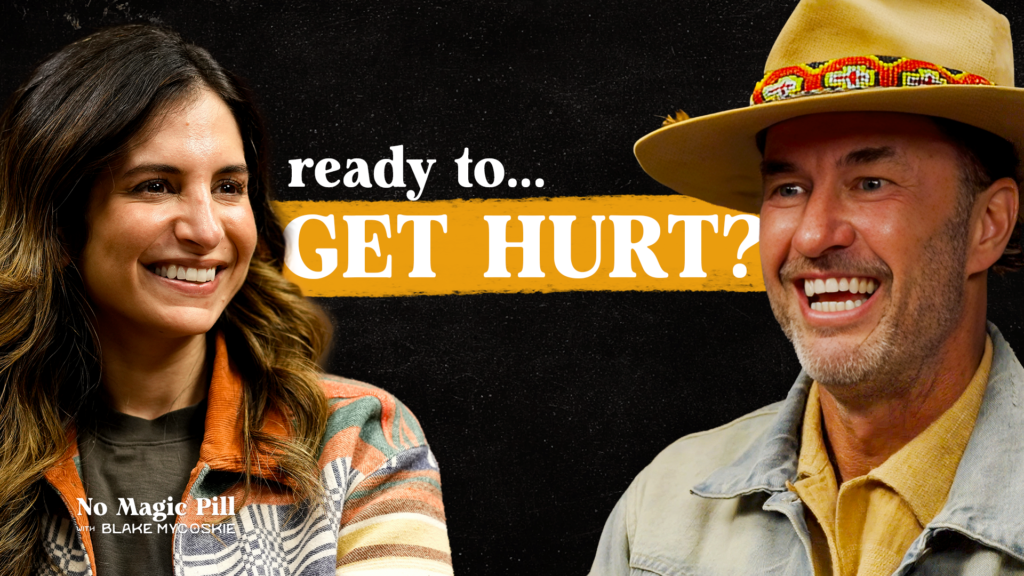
In this episode of No Magic Pill, Blake sits down with Sabrina Zohar, relationship coach, host of The Sabrina Zohar Show, and New York Times bestselling author of Why Am I Like This?, for the show’s first deep dive into romantic relationships. Blake comes in with two divorces behind him, a men’s group he rates a 10 out of 10, and the best relationship of his life, which he does not want to mess up, and asks Sabrina to take the mystery out of being a great partner.
Sabrina starts with the bullshit blueprint, the programming we pick up before we have words, and explains why the wrong person can feel so right while a healthy partner feels boring. From there the conversation gets practical: the 90 seconds it takes an emotion to pass, why texting turns into a search for reassurance, what a boundary actually is, the three-letter ritual for ending a relationship, and why she tells people to stop chasing the spark and date for how they feel with someone, not about them.
“Your brain is designed to keep you safe. It’s not here to help you grow.”
~Sabrina Zohar
What You’ll Learn
- Why the wrong person can feel so right, and why a healthy partner can feel boring at first
- What the bullshit blueprint is, and how beliefs from childhood follow you into relationships
- The 90-second rule for riding out a trigger before you react
- Why texting becomes a search for reassurance, and small ways to slow it down
- What a boundary actually is, and why setting one you do not keep is worse than none
- Why to stop chasing the spark, stop dating potential, and pay attention to how you feel with someone
The Conversation
The Pinch Doesn’t Match the Ouch
When you lose it with a partner, Sabrina says, you are rarely reacting to what is happening in the moment. Her test is whether the pinch matches the ouch. Early in her relationship, her partner simply said no to a trip to HomeGoods, and she felt a wave of heat and wanted to attack. That gap is the tell: a neutral action lands with a body sensation, a story, and an urgency, your prefrontal cortex goes offline, and the fear center takes over. Her first question in that moment is how old do you feel right now, because the answer usually points straight back to where you learned it. The line Blake asks her to repeat sets up the whole episode: your brain is designed to keep you safe, not to help you grow.
The Bullshit Blueprint
Sabrina defines the bullshit blueprint as the subconscious programming you receive early on, and she is careful to say it is not about blaming parents but about holding them accountable for what they taught you. Mary Ainsworth’s research on attachment showed how early the wiring starts: the toddler who seemed calm when mom left had the highest heart rate in the room. The blueprint explains why a client who grew up feeling like a problem kept dating people who made him earn it, and then found a partner who adored him boring. Sabrina lived it herself, raised by a father who made her feel like too much and never enough, and she had to learn to receive a partner who loved her without the performance. Blake recognizes his own version instantly: one limiting belief, that he was never enough, sabotaged probably 20 years of relationships. Her reframe for getting unstuck is simple: swap why for I don’t like. Not why didn’t they call, but I don’t like that they didn’t call, and then ask what it made you feel.
Self-Sabotage Is Self-Protection
Sabrina reframes self-sabotage as self-protection: behaviors that once kept you safe and have simply outlived their job. Her own turning point came at her rock bottom after a breakup with someone very much like her father, when a series of ketamine-assisted sessions brought her face to face with her eight-year-old self and opened up the inner child work she still does today, without the medicine. Blake underlines what makes that kind of work safe, the right setting, the right practitioner, and real integration afterward, and the two agree that inner child work is not woo woo. It is a way of validating your own experience instead of telling yourself other people had it worse, and of letting the adult take back the jobs a seven-year-old was never meant to do.
Ninety Seconds and the Text You Don’t Send
Trying to eliminate triggers misses the point, Sabrina says; relationships are uncomfortable, and the goal is a wider window of tolerance. Her favorite tool comes from neuroanatomist Jill Bolte Taylor: an emotion takes about 90 seconds to run its course, and every new thought restarts the clock. So set a timer, name it to tame it, and spend that time noticing where you feel it in your body, then talk to yourself in the third person once the alarm brings your thinking brain back. Nowhere does this matter more than texting, which she calls a false sense of intimacy and a slot machine of intermittent rewards. She tells the story of a visit from her mother, years after a life-threatening health scare, that she spent on her phone with a man she had never met. Her advice for breaking the habit is to start so small it is almost insulting: write the text in your notes first, wait a minute before every reply, and think of how future you will feel.
Boundaries You Actually Keep
Blake admits he was the king of setting boundaries and never keeping them, and Sabrina’s definition reframes the whole idea: a boundary is what you are willing to do, not what other people have to do. You have to text me every day is a request; I don’t answer the phone after nine is a boundary, and you are the one who crosses it when you pick up. Setting a boundary you do not keep tells people your word does not mean anything, and people pleasing, she says, is really an attempt to control the emotional landscape so no one leaves. It is okay to lose people and to disappoint them, because she would rather disappoint you for who she is than get you for who she is not. Blake shares that the hardest place for him to hold the line is with his young daughter, and Sabrina’s answer is to start with low-stakes moments, like asking a barista to heat up a cold coffee, that give your nervous system a corrective experience and let you build from there.
Stop Chasing the Spark
For anyone deciding whether to stay, Sabrina offers one question: is what you are getting enough to grieve what you are not? If it is time to go, her three-letter ritual helps you let go without needing the other person: one letter with everything you ever wanted to say and will never send, one to the version of you who was in the relationship, and one to the person you are becoming, because the person who hurt you is not the one who heals you. Her most important advice is the one in the title: do not chase the spark, which is often just your body recognizing something familiar. Date for how you feel with someone, not about them, do not date potential, and do not date until you are ready to get hurt again. The conversation ends with Blake telling the story of the Enough bracelet, and Sabrina turning the question back on him: where did you learn you were not enough? Her answer for Blake, and for everyone listening, is the reframe she leaves with: you are not broken, and there is nothing to fix; you just have some healing to do.
About Sabrina Zohar
Sabrina Zohar is a relationship coach, the host of The Sabrina Zohar Show, and the New York Times bestselling author of Why Am I Like This?. Through her coaching, her podcast, and her book, she helps people understand the patterns they bring into love, set boundaries they actually keep, and build relationships that feel safe rather than familiar.
Links
Website: sabrinazohar.com
Instagram: @sabrina.zohar
Podcast: The Sabrina Zohar Show
More from Blake
Enough Foundation
Enough exists to spread reminders in every form, from bracelets to messages to actions to community, until feeling enough becomes the cultural default. Learn more at weareenough.co.
Morning Water
A daily hydration formula that restores energy, balance, and performance with essential electrolytes, minerals, and nutrients in one simple routine.
Learn more at morningwater.co and use code NOMAGICPILL for 25% off your first order.
SONIA
A conversational AI companion built for emotional support, offering guided wellbeing sessions through voice and text, including meditations, journaling, personalized recommendations, and practical exercises. Learn more at soniahealth.com or download it on the App Store.
MOOVLAB
Health and wellness brought into your workday. The answer to sitting is moving. Learn more at moovlab.com.
Follow Blake on Instagram at @blakemycoskie.
This episode is for informational and entertainment purposes only and is not intended as medical advice. Always consult a qualified healthcare professional with any medical questions or concerns.

