
Ep 19: How Dhar Mann Turned Rock Bottom Into a 250 Million-View Empire | No Magic Pill
September 1, 2026
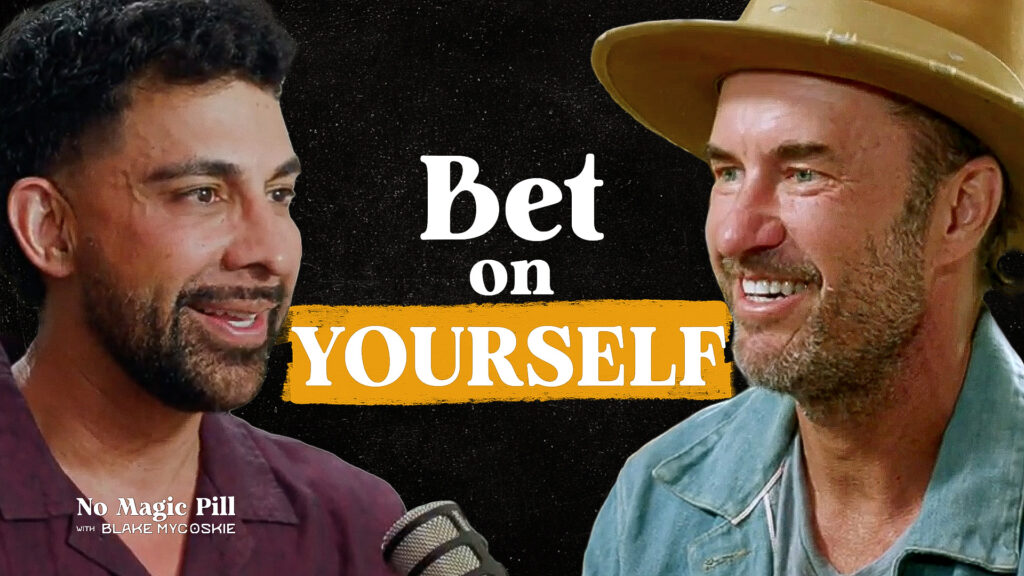
In this episode of No Magic Pill, Blake Mycoskie sits down with Dhar Mann, filmmaker, entrepreneur, and founder of Dhar Mann Studios, whose short inspirational films about underdogs and comebacks have been viewed billions of times. It is a raw conversation about depression, failure, radical responsibility, and building a life with purpose.
Dhar takes Blake back to the milestone birthday he spent at the lowest point of his life: broke, heartbroken, weeks from losing his apartment, and haunted by a recurring dream of a tombstone that read, here lies Dhar Mann, a failure. What happened next is the heart of this episode. From reframing failure as part of success to taking radical responsibility to the simple act of putting on your shoes and going for a walk, Dhar shares the lessons that helped him turn struggle into something meaningful.
“If you don’t see yourself as the problem, then you will never see yourself as the solution.”~Dhar Mann
What You’ll Learn
- Why failure is not the opposite of success but a part of it
- The radical responsibility shift that ends the blame cycle and puts you back in charge
- The smallest step that breaks depression’s paralysis: put on your shoes
- What the Japanese art of kintsugi teaches about turning your cracks into your story
The Conversation
The Achievement Trap
Blake opens with the thing he recognized immediately in Dhar’s story: the myth that success, money, and accomplishment will finally make you lovable. Dhar traces his version to its roots, a father with an insatiable drive to collect more and a high-achieving mother raised by a military disciplinarian, where an A-minus prompted the question of why it was not an A. More is never enough, he says, is a dangerous cocktail, and he admits he still fights it. Blake shares the other side of the same coin: magazine covers, awards at the White House, one hundred million kids in shoes, and none of it landing, because external success does not create internal success.
Rock Bottom at 30
Dhar entered his thirties wanting to feel like his life was coming together and instead hit the lowest point of it: a bad breakup, completely broke, depression and anxiety, three weeks from losing his apartment. He describes the recurring dream that haunted him, a tombstone reading here lies Dhar Mann, a failure. In that low state he started reading, meditating, and working on himself, and landed on the idea that changed his direction: external success starts with internal success. The workout does not make you fit; the commitment that got your shoes on first does.
Failure Is Part of Success
The stories that pulled Dhar off the floor were the failures behind the successes everyone worships: Michael Jordan cut from his high school team, J.K. Rowling rejected by publisher after publisher, and, as Blake adds, Tim Ferriss collecting 26 denials for The 4-Hour Workweek. Maybe failure is not the opposite of success, Dhar realized, maybe it is part of it, and every failure just finds one more way that does not work. He shares Ray Dalio’s video game analogy, where failure is a gemstone you collect that makes you stronger and wiser, and the Dalai Lama’s teaching that the depth of your suffering defines the height of your joy. His own failures became the empathy engine behind his storytelling, and his struggle became his superpower.
Radical Responsibility
Dhar used to blame everything: the economy, the timing, the business partner. Reading about radical responsibility flipped it, and he lands on the line of the episode: if you don’t see yourself as the problem, then you will never see yourself as the solution. He cites Jim Collins’ research that the best leaders, when something goes wrong, don’t look out the window, they look in the mirror. The two also get honest about what depression actually feels like in the body, exhausted and scared at once, feeling everything one minute and numb the next, and Dhar offers the distinction that helped him take his life back: those feelings are real, but that does not make them the truth.
Put On Your Shoes
When the littlest task feels impossible, Dhar’s practice is almost absurdly simple: just put on your shoes. Because once your shoes are on, you go outside, and outside is where healing happens, sunlight, grass, a stranger’s conversation, someone walking their dog. Blake connects it to shinrin-yoku, the Japanese practice of forest bathing prescribed to burned-out office workers, and to his own current mission of getting people ten or fifteen minutes of fresh air a day. It costs nothing, and it builds the first momentum out of a dark place.
Kintsugi and the Beauty of Cracks
Dhar’s new podcast, What Happens Next, is built on the Japanese philosophy of kintsugi: pottery broken and repaired with gold, more beautiful for its cracks. Your cracks do not make you a failure, he says, they make you relatable, and without them there is no story worth telling. He and Blake trade the version of Blake’s bio with no conflict in it and agree no one would listen. Dhar closes with the perspective that carried him through his lowest points: God answers prayers, just not always in the form you are looking for. Pray for strength and you get challenges that make you stronger; pray for courage and you get fears to overcome.
About Dhar Mann
Dhar Mann is a filmmaker, entrepreneur, and the founder of Dhar Mann Studios, a video production company creating short, inspirational films about underdogs, comebacks, and life lessons that have been viewed billions of times across platforms. He is also the host of the new podcast What Happens Next, built around the Japanese philosophy of kintsugi and the stories behind people’s hardest moments.
Links
Instagram: @dhar.mann
Website: https://www.dharmann.com/
More from Blake
Enough Foundation
Enough exists to spread reminders in every form, from bracelets to messages to actions to community, until feeling enough becomes the cultural default. Learn more at weareenough.co.
Morning Water
A daily hydration formula that restores energy, balance, and performance with essential electrolytes, minerals, and nutrients in one simple routine.
Learn more at morningwater.co and use code NOMAGICPILL for 25% off your first order.
SONIA
A conversational AI companion built for emotional support, offering guided wellbeing sessions through voice and text, including meditations, journaling, personalized recommendations, and practical exercises. Learn more at soniahealth.com or download it on the App Store.
MOOVLAB
Health and wellness brought into your workday. The answer to sitting is moving. Learn more at moovlab.com.
Follow Blake on Instagram at @blakemycoskie.
This episode is for informational and entertainment purposes only and is not intended as medical advice. Always consult a qualified healthcare professional with any medical questions or concerns.

