
Ep 26: Carl Lentz | What Nobody Tells You About Rebuilding Your Life After Losing Everything
October 20, 2026
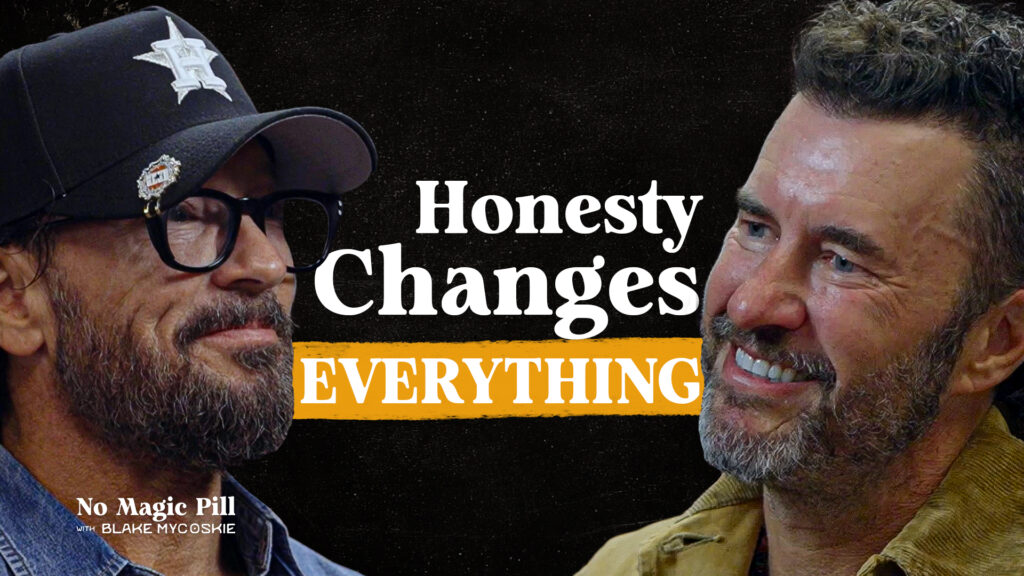
In this episode of No Magic Pill, Blake Mycoskie sits down with Carl Lentz, the former pastor of Hillsong New York, who preached to thousands every week and led a movement that felt like revival while privately falling apart. In 2020 he was fired after an affair, and the life he had spent years building collapsed in public. What followed is the real subject of this conversation: the honest, unhurried work of rebuilding a self, a faith, and a marriage from nothing.
Carl goes all the way in: the slow erosion that comes long before the fall, the active lies that wage a war with your soul, the friends who refused to let him give up, and what he and his wife Laura learned writing their book Overcoming Infidelity, from the one-day contract their marriage still runs on to why ownership, not shame, is what finally sets you free. Blake opens up in return, sharing two stories he has never told on the show. It is one of the most emotional conversations of the season.
“You can’t heal what you’re hiding, and you will always transfer what is not getting transformed.”
~ Carl Lentz
What You’ll Learn
- Why the fall rarely starts when you get caught: the slow erosion and active lies that come first
- A practical first step for coming clean: practice saying the quiet thing out loud with someone safe
- Why “what do you need from me?” matters more than “do you forgive me?”, and why forgiveness and trust are two different things
- How ownership, not shame, is what finally sets you free
The Conversation
We Came Here to Heal
Blake opens with the question he once asked a shaman deep in the Amazon: what is the point of this human journey? Carl’s answer sets the tone for everything that follows: to heal, and to never settle with something broken if there is a chance it could heal. He spent years believing parts of himself were irretrievable, and it turned out that was not the case. The two trade their versions of the enough wound, Blake’s lifelong sense that he had to earn love, and Carl’s hard-won middle ground: not where I am going to be, not where I should be, but where I am is enough today. And Carl names the thing he felt watching Blake from a distance: people who have been through the fire carry an unguardedness you can feel in their soul.
The Friends Who Would Not Let Go
Carl is honest that when everything collapsed, he contemplated ending his life. What carried him through was not a breakthrough but a handful of people who kept pushing one question: what if something else might be true? Bob Goff called him on the worst day of his life, so full of joy that Carl figured he might as well listen. Blake shares the advice that helped him through his own darkest stretch: you do not have to solve everything today, just make it through this hour, and then the one after, staying connected to the future until the nervous system can calm down enough for the real work to begin. If you need one sentence from this section, Carl offers it: you just need a couple of people to whisper things like that, and it changes everything.
The Slow Erosion and the Active Lies
Everyone thinks the breakdown starts when you get caught, Carl says; the truth is you have been breaking down in plain sight for years. He walks through the slow erosion that preceded the fall, the stacking of hard moments he kept promising himself he would get on top of, and the distinction at the center of the episode: an active lie, allowing people to believe something you know is not true, makes war with your soul that never ends. Blake brings back Kevin Love’s line from early in the season, nothing haunts us like the stuff we don’t say, and Carl’s practical advice for anyone living with a secret is disarmingly simple: practice getting honest with someone safe, even a stranger, to learn what it feels like to say the quiet thing out loud. Find the person who offers coverage, not leverage.
The Desert, and Proof That People Can Change
Carl tells the rehab story with self-deprecating honesty: arriving at a program in Arizona, demanding his medications, grabbing his bags to leave, and realizing ten minutes into the walk exactly why they put rehabs in the desert. He turned around. What he found at Onsite and in treatment was the discovery that he was not irretrievably broken, and the lesson he now stands on: everybody can change if they are willing to lay it all on the table. He talks about what the recovery community taught him that years of church had not, that the only ticket of entry is admitting you have an issue, and about the moment Blake passes along the sentence that changed his own recovery: you do not have to be the person you were five minutes ago.
Ten Conversations: Rebuilding With Laura
The wisest thing he and Laura did, Carl says, was uncouple the timelines: get healthy first, each on their own road, and figure out the marriage after. Their book, Overcoming Infidelity, is ten chapters and ten conversations from that rebuild, and this section is full of its hardest-won tools. Why “what do you need from me?” matters more than “do you forgive me?”, a question Carl still asks before every trip. Why forgiveness is a choice to release a debt while trust is evidence built over time, and why Laura did not say the words “I forgive you” for three years. Why the man who broke trust compiles a new evidence stack rather than asking to be let off the old one. And why it is called overcoming, not overcome: they will be overcoming the consequences of his choices for the rest of their lives, and they are okay with that. Choose your hard, he says; staying is hard, leaving is hard, and you do not get to escape hard.
Ownership, Not Shame
Shame, Carl argues, is ultimately self-focused: it drops your head and your eyes exactly when you need vision to live differently. Ownership is the opposite, and his proof is the book itself: you want to shame me about what happened in my marriage? I raise you a book about it. The closing stretch is the most spiritually alive of the season. Carl on becoming a catch-and-release man with his own thoughts. Blake on the statistic from his TED talk, that half of Americans will break a bone and half will be diagnosed with a mental health condition, yet only one comes with casseroles instead of stigma. The language shift they both practice: not my depression, but a season I am walking through. Blake tells the never-before-told story of Glenn, the tennis coach whose quiet joy led him to faith at 17, and the two land on the Ram Dass line that answers the question the episode opened with: we’re all just walking each other home.
About Carl Lentz
Carl Lentz is the former pastor of Hillsong New York, where he preached to thousands every week, and is today a speaker, coach, and host of the podcast Lights On with Carl Lentz. He and his wife Laura are the authors of Overcoming Infidelity, ten conversations from their own rebuild that now anchor their work helping couples heal after betrayal. He lives with his family and speaks openly about recovery, honesty, and faith.
Links
Instagram: https://www.instagram.com/carllentz
More from Blake
Enough Foundation
Enough exists to spread reminders in every form, from bracelets to messages to actions to community, until feeling enough becomes the cultural default. Learn more at weareenough.co.
Morning Water
A daily hydration formula that restores energy, balance, and performance with essential electrolytes, minerals, and nutrients in one simple routine.
Learn more at morningwater.co and use code NOMAGICPILL for 25% off your first order.
SONIA
A conversational AI companion built for emotional support, offering guided wellbeing sessions through voice and text, including meditations, journaling, personalized recommendations, and practical exercises. Learn more at soniahealth.com or download it on the App Store.
MOOVLAB
Health and wellness brought into your workday. The answer to sitting is moving. Learn more at moovlab.com.
Follow Blake on Instagram at @blakemycoskie.
This episode is for informational and entertainment purposes only and is not intended as medical advice. Always consult a qualified healthcare professional with any medical questions or concerns.

