
Ep 22: 100% Sobriety, Male Loneliness, and Healing Parental Wounds | Karamo Brown
September 22, 2026
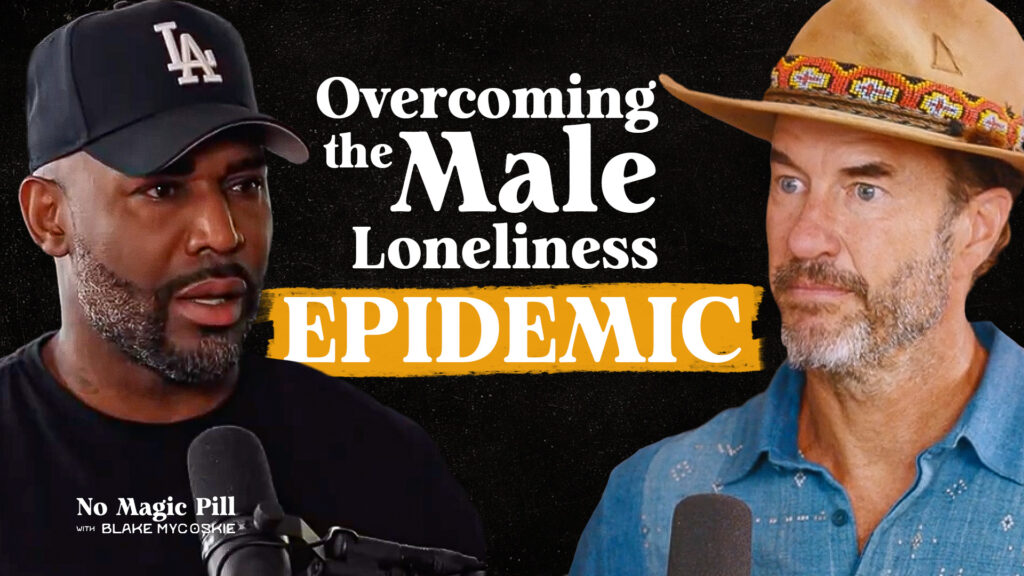
In this episode of No Magic Pill, Blake sits down with TV host, culture expert, and author Karamo Brown for one of the most honest conversations of the season on vulnerability, male mental health, and the power of radical self-acceptance. Karamo traces his path from a Jamaican household in Texas, where men did not talk about their feelings, through social work, reality television, and the brutal early rejection that could have ended his hosting career before it began.
He opens up about discovering he had a nine-year-old son at 25, the years he spent pretending he was not drowning as a single father, and the decision one year ago to go 100% sober and be fully clear for the first time since he was a teenager. Together, he and Blake trade the practical tools underneath it all: the monthly friendship audit, the difference between giving something up and choosing health, and the shoulder-to-shoulder secret that unlocked some of the most emotional moments in Queer Eye history.
“If no one can see me, it’s really my duty to see myself.”~ Karamo Brown
What You’ll Learn
- Why Karamo stepped away from all substances to reset his clock, and what 100% clarity has changed
- How pretending everything is fine becomes a personal prison, and how to stop
- The monthly friendship audit: a practical framework for evaluating patterns, boundaries, and growth
- Why shoulder-to-shoulder conversations unlock male vulnerability, and the Queer Eye secret built on it
The Conversation
Saying Yes, and Failure as Part of Success
The two open with the unlikely gift of reality television: for a kid raised between Jamaican and Texan cultures where men did not discuss emotions, it was the first place Karamo ever saw a man cry. Blake trades his own reality TV confessions, including a long-buried male beauty pageant appearance as Mr. Tennessee, and the pair land on a shared philosophy: say yes, because you never know which yes opens the thousand paths. On the wall of Karamo’s studio is the reminder that anchors it: failure is not the opposite of success, it is part of it.
“You Don’t Know My Destiny”
Before Queer Eye, before the Emmys, before his own talk show, Karamo was hired for his first hosting job and fired four months later by an executive producer who told him, in devastating detail, that he did not have it and should give up hosting. Even his mother told him to go back to social work. His response became a mantra he repeated out loud: you don’t know my destiny. That resilience, he explains, was forged earlier, when he told everyone he was gay at 14 in 1990s Texas and was rejected in every direction at once, too Black for one room, too gay for another, too masculine for a third. The rejections came so fast and so contradictory that he drew the only conclusion that made sense: all these people can’t be right, and if no one can see me, it is my duty to see myself.
Surprise Fatherhood at 25
At 25, Karamo came home to a stack of papers on his doorstep: back child support for a nine-year-old son he never knew he had, from the one time he and his high school best friend skipped school to practice. He genuinely thought he was being pranked for television. What followed instead was one of the most beautiful threads of the episode: reuniting with the mother he had lost touch with, watching every ounce of anger dissolve the moment she opened the door, gaining custody of his son and, a year later, his son’s little brother, and spending the years since honoring her for the first nine years that made his son who he is. He never planned on being a father. Now he is about to be a grandfather.
The Prison of Pretending
The single-father years looked nothing like they felt. Karamo was mimicking every TV dad he had ever seen while privately drowning: full of anxiety, broke enough that one morning he had to choose between his son’s lunch money and his own bus fare, then walked ninety minutes to work rather than ask anyone for help. I was conditioned to be the man who always had the answers, he says, and that conditioning became my prison. The turn began with a demand he made of himself: stop pretending. He and Blake go deeper on the modern version of the same trap, fluently using therapy language from social media while never actually doing the work, because identifying a pattern is not the same as having the tools to resolve it. The antidote they land on: be genuinely curious about yourself, because whatever you refuse to look at is running your life anyway.
100% Sobriety: Choosing Health and Peace
Karamo shares his mental health history with striking openness, including surviving a suicide attempt in 2005 and years of using drugs to cope with feelings he had no framework for. He got sober from drugs two and a half years ago, but the real shift came a year ago, when he realized he had not been fully clear since he was a teenager and decided to go 100%: no substances of any kind, a full reset of the clock. Everything got better, he says, and for the first time he is dreaming about living to 100. Blake marks his own one-year sobriety milestone and shares the reframe that made it stick: he did not give up alcohol, he chose health. They talk about why high-functioning people are the most at risk, the habit of negotiating with your own health, and the healing underneath it all for Karamo: making his own peace the priority after a lifetime of protecting everyone else’s, including walking away from a press tour that his own team told him to smile through.
The Friendship Audit and the Male Loneliness Epidemic
Most men are lonely, Karamo says, because most men have titles instead of identities and group chats instead of friends. His answer is a practice he teaches his own son: a monthly friendship audit, writing down the patterns in each relationship and honestly balancing the good against the bad, so you can see who is actually in your corner. For reaching the men in your life, he offers his grandmother’s rule, two ears, one mouth, and reveals a Queer Eye secret: he always drove the heroes himself because men open up shoulder to shoulder, eyes on the road, in a way they cannot face to face. It is the technique behind some of the show’s most extraordinary moments, including reuniting a man with the person whose act of violence had paralyzed him, a reconciliation that ended in forgiveness, and helping a father find his way back to the daughter he had stopped seeing. I healed myself, Karamo says, by helping heal others.
About Karamo Brown
Karamo Brown is a TV host, culture expert, author, and former social worker. He made history in 2004 as the first openly gay Black man on reality television on MTV’s The Real World, and is best known as the culture expert on Netflix’s Emmy-winning series Queer Eye and as host of his own daytime talk show, Karamo. A longtime advocate for mental health, he is a father of two sons.
Links
Instagram: @karamo
Website: https://karamo.com/
More from Blake
Enough Foundation
Enough exists to spread reminders in every form, from bracelets to messages to actions to community, until feeling enough becomes the cultural default. Learn more at weareenough.co.
Morning Water
A daily hydration formula that restores energy, balance, and performance with essential electrolytes, minerals, and nutrients in one simple routine.
Learn more at morningwater.co and use code NOMAGICPILL for 25% off your first order.
SONIA
A conversational AI companion built for emotional support, offering guided wellbeing sessions through voice and text, including meditations, journaling, personalized recommendations, and practical exercises. Learn more at soniahealth.com or download it on the App Store.
MOOVLAB
Health and wellness brought into your workday. The answer to sitting is moving. Learn more at moovlab.com.
Follow Blake on Instagram at @blakemycoskie.
This episode is for informational and entertainment purposes only and is not intended as medical advice. Always consult a qualified healthcare professional with any medical questions or concerns.

