
Ep 23: What If the Treatment Is Making You Worse? | Laura Delano
September 29, 2026
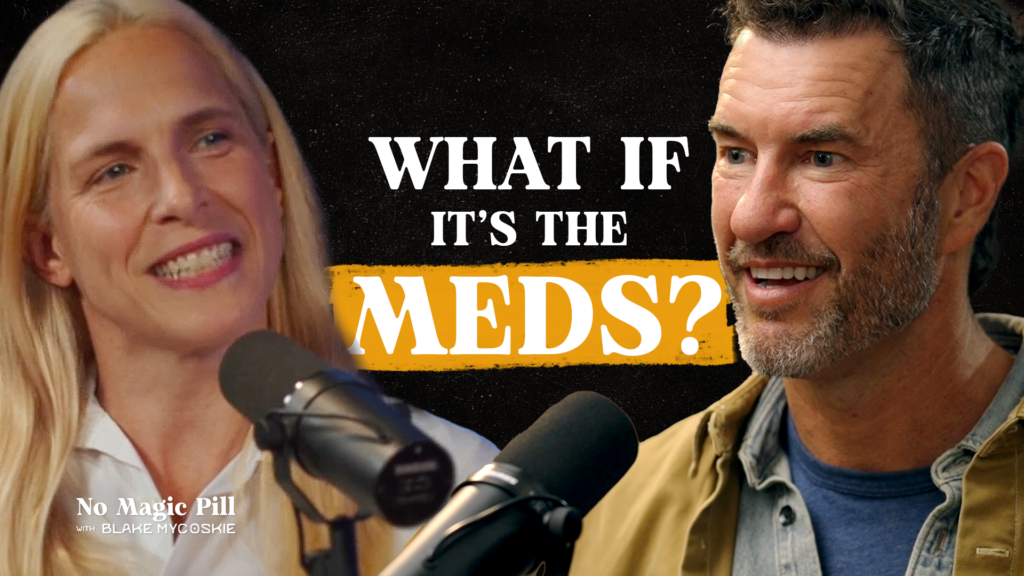
At 13, Laura Delano was told, within a single one-hour session, that she had an incurable illness in her brain and would need psychiatric medication to manage it. What followed were two decades of diagnoses, hospitalizations, and a growing list of medications, while her life kept falling further apart. In this episode of No Magic Pill, Blake Mycoskie sits down with the author of Unshrunk to explore the question that ultimately changed the course of her life: what if it wasn’t treatment-resistant mental illness? What if the treatment itself was part of the problem?
Drawing on Laura’s story and Blake’s own experience with a bipolar II diagnosis, four psychiatric medications, and a long, carefully supported taper, this is not a conversation about being for or against medication. It is about agency, informed decision-making, the real dangers of coming off medication too quickly, and what becomes possible when we ask, alongside “what’s wrong with me?”, a different question: “what happened to me?”
“What if it’s not treatment-resistant mental illness? What if it’s the treatment?”~ Laura Delano
What You’ll Learn
- The question that changed Laura’s life: what if it wasn’t treatment-resistant mental illness, but the treatment itself
- What physical dependence actually is, and why tapering off psychiatric medication too quickly is so dangerous
- How to make a truly informed decision about medication, starting with learning to read a drug label
- Why asking “what happened to me?” opens doors that “what’s wrong with me?” cannot
The Conversation
Two Parallel Stories
Blake opens with his own story: four years of worsening depression, a dinner-party psychiatrist convinced he was bipolar, and the strange relief of finally having a diagnosis, so much relief that he went around telling friends the news with excitement. One medication became four, his depression deepened into suicidality, and it took an unusually skilled psychiatrist, extensive testing, and six careful months of tapering to discover he was not bipolar at all, but deeply depressed with real, situational causes that needed to be faced. When he read Unshrunk, he says, it was like reading his own story. Laura felt the same parallels immediately.
The Performance Track
Laura grew up with everything apparently together: strong student, standout athlete, student government leader. At 13, an experience in front of a mirror shattered the performance, leaving her terrified that underneath it all she had no real self. Without support or language for what might have been a doorway, she concluded something was deeply wrong with her, broke down at home, and was diagnosed bipolar within one hour of meeting a psychiatrist. Through boarding school and Harvard the pattern held: performing outwardly, unraveling inwardly, and eventually fully embracing the diagnosis. She became, in her words, a perfectionistic patient, diligent with every medication, group, and worksheet, while her health, friendships, and hope collapsed, until the label of treatment-resistant bipolar disorder took away the last of it.
The Question That Changed Everything
The turn began, unexpectedly, in the halls of AA. Getting sober at 27, Laura encountered the twelve steps and saw for the first time how much of her life had been driven by fear disguised as reality. She began untangling herself from stories she had taken for granted, eventually including the story that she was bipolar. Then she found Robert Whitaker’s Anatomy of an Epidemic and the long-term research it assembles: in the same era that psychiatric medication use has skyrocketed, with roughly one in four Americans on a psychiatric medication by recent CDC survey data, rates of diagnosis and psychiatric disability have risen right alongside it. Sitting with that, she had the realization that reframed her life and gives this episode its title: what if it’s not treatment-resistant mental illness? What if it’s the treatment?
What These Drugs Actually Do
Laura and Blake are careful here, and repeat it more than once: these medications genuinely help some people, and this is not an argument against them. It is an argument for honesty about what they are. Laura walks through the research on the placebo effect in antidepressant trials, why the chemical-imbalance story is better understood as marketing than science, and the difference a single word makes: medication connotes treating an illness, while these are psychoactive drugs that change how the central nervous system works. That reframe matters because informed choice depends on accurate language. Her most practical advice: before starting anything, learn what “effective” actually meant in the trials behind it by reading the FDA drug label yourself, and get curious about the context of your suffering first, because you cannot simultaneously have simple bad luck with brain chemistry and be having a meaningful response to your life.
Tapering Safely
This is the section Blake most wants people to hear, and it comes with a warning both of them repeat: coming off psychiatric medication can be dangerous, and it should never be done abruptly or alone. Laura explains physical dependence, which is not addiction but the nervous system adapting to a drug’s presence, why withdrawal symptoms often mimic the original diagnosis and get mistaken for relapse, and why safe tapering is slow, guided by how the person is actually feeling, and hyperbolic, with reductions that get progressively smaller as the dose gets smaller. They talk honestly about resources and timing: stress, stability, nutrition, and a support system that respects the decision all matter, and sometimes the right answer is that now is not the time. With psychedelic therapies moving toward wider approval, both worry about desperate people quitting medications cold turkey to qualify, a mistake that can cost lives, and Laura’s message is that the information and support to do this safely exist and are free.
Feeling It, and the Way Through
Having spent her teens and twenties medicated, Laura says she never got to learn what her body and emotions were telling her, and that learning to sit with pain, rather than immediately reaching for something to make it stop, has been the most liberating practice of her life. Blake shares his version: the mess is the message, and his seven years of depression were trying to tell him something quietly before it had to get loud. They talk about mutual aid and the original meaning of the word expert, someone who knows through experience, about what men in particular were never given room to feel, and about moving from fear toward faith and curiosity in the face of the unknown. Laura’s closing message to anyone questioning, starting, or leaving a medication: you are far from alone, the information you need is freely available, and there is a way through.
About Laura Delano
Laura Delano is a writer, speaker, and consultant, and the author of Unshrunk: A Story of Psychiatric Treatment Resistance. She is the founder of Inner Compass Initiative, a nonprofit that helps people make more informed choices about psychiatric diagnoses, drugs, and drug withdrawal, offering free resources including a step-by-step tapering guide and the Inner Compass Exchange mutual support community. A leading voice on psychiatric drug withdrawal for more than 16 years, she works with individuals and families around the world seeking guidance for the withdrawal journey and life beyond it.
Links
Instagram: @_lauradelano_
Website: https://www.lauradelano.com/
More from Blake
Enough Foundation
Enough exists to spread reminders in every form, from bracelets to messages to actions to community, until feeling enough becomes the cultural default. Learn more at weareenough.co.
Morning Water
A daily hydration formula that restores energy, balance, and performance with essential electrolytes, minerals, and nutrients in one simple routine.
Learn more at morningwater.co and use code NOMAGICPILL for 25% off your first order.
SONIA
A conversational AI companion built for emotional support, offering guided wellbeing sessions through voice and text, including meditations, journaling, personalized recommendations, and practical exercises. Learn more at soniahealth.com or download it on the App Store.
MOOVLAB
Health and wellness brought into your workday. The answer to sitting is moving. Learn more at moovlab.com.
Follow Blake on Instagram at @blakemycoskie.
This episode is for informational and entertainment purposes only and is not intended as medical advice. Always consult a qualified healthcare professional with any medical questions or concerns.

